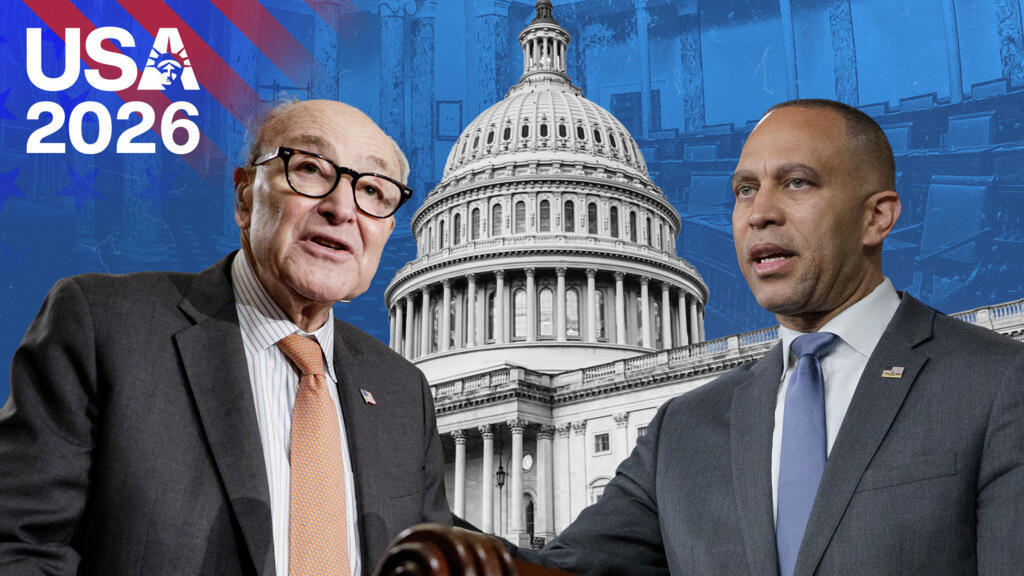
US Midterm Elections 2026: Democrats Capture Senate and House as Trump Faces Divided Washington
By: Javid Amin | 04 November 2026
World Politics | United States
The 2026 US midterm elections have delivered a major political reversal in Washington, with Democrats winning control of the Senate and securing a projected majority in the House of Representatives, according to election-night projections and reporting by major US news organisations.
The results mark a significant shift in the balance of power during President Donald Trump’s second term. After entering the 2026 elections with Republicans controlling both chambers of Congress, the administration now faces the prospect of two years of divided government, stronger congressional scrutiny and growing resistance to its legislative priorities.
America’s 2026 midterm elections have reshaped Washington. Democrats have won control of the Senate and secured a projected House majority, while major victories in Texas, Ohio and Georgia have created a new political challenge for Donald Trump’s second presidency.
The Democratic gains have extended well beyond traditionally competitive states. Victories in Texas, Kansas, South Carolina and Ohio have reshaped the Senate map, while several House contests have produced breakthroughs in districts that Republicans had expected to retain.
The political significance goes beyond the number of seats changing hands. The results suggest that concerns over living costs, economic conditions, the administration’s policy direction and the consequences of US foreign policy have become important factors in the midterm vote.
For Trump, the election represents a substantial setback to his domestic legislative programme. For Democrats, it provides an opportunity to reclaim congressional influence and challenge the administration through legislation, investigations and oversight.
However, the election does not give Democrats unrestricted control over national policymaking. Trump remains president, retains executive authority and can use his veto power to block legislation. The coming two years could therefore be defined by political confrontation, negotiations and institutional checks.
Democrats Take Senate as Republican Strongholds Fall
One of the most consequential developments of the election was the Democratic capture of the US Senate.
According to the Associated Press, Democrats secured control of the chamber after winning a series of closely watched contests, including major breakthroughs in Texas, Kansas and South Carolina. Ohio also produced a significant Democratic victory, with former senator Sherrod Brown defeating Republican incumbent Jon Husted.
The result is particularly important because Senate control determines more than the passage of ordinary legislation. The chamber has a central role in confirming presidential appointments, approving federal judges and considering international treaties.
Republicans had entered the election with a Senate majority and were defending several seats in states where Democrats saw opportunities for gains. The eventual results changed that calculation.
Texas: James Talarico Makes History
Texas delivered one of the most closely watched results of the election.
Democrat James Talarico defeated Republican Ken Paxton in the Senate contest, giving Democrats a historic breakthrough in a state that had remained a Republican stronghold in statewide federal elections for decades.
Talarico, a Texas state representative from Austin, entered the contest against Paxton, the state’s Republican attorney general. The campaign attracted national attention because of the possibility that Democrats could overturn the Republican advantage in a state central to the party’s national electoral strategy.
The Associated Press called the race for Talarico as counting continued, while subsequent reporting described his victory as the first Democratic win in a Texas Senate election since 1988.
The result has implications beyond the Senate seat itself. Texas has long been an important source of Republican strength in presidential and congressional elections. A Democratic victory raises fresh questions about changing voter coalitions, the political influence of urban and suburban communities, and the limits of Republican dominance.
It would nevertheless be premature to interpret one election as proof that Texas has permanently changed its political identity. The result establishes a major breakthrough, not an irreversible realignment.
Kansas and South Carolina: Further Republican Losses
Democrats also captured Senate seats in Kansas and South Carolina, adding to the scale of their national gains.
These victories are particularly notable because both states have traditionally leaned Republican in federal elections. Their results demonstrate that the Democratic gains were not confined to familiar battleground states.
In South Carolina, the result added another setback for Republicans in a state where the party has maintained a strong electoral position.
The Kansas outcome was similarly significant, illustrating how dissatisfaction with national political conditions can affect races even in states with established Republican voting patterns.
Taken together, the victories in Texas, Kansas and South Carolina changed the Senate balance and helped Democrats secure control of the chamber.
Ohio: Sherrod Brown Returns to the Senate
Ohio produced another important Democratic victory.
Former Democratic senator Sherrod Brown defeated Republican Jon Husted, who had been serving as Ohio’s senator following JD Vance’s departure for the vice-presidency.
Brown’s return is politically significant. He previously represented Ohio in the Senate and maintained a profile centred on manufacturing employment, workers’ rights and economic concerns.
His victory also demonstrates that Republican strength in Ohio does not automatically translate into success in every statewide contest.
The result gives Democrats another Senate seat while returning a familiar political figure to a chamber where control will have direct consequences for Trump’s legislative and judicial priorities.
House of Representatives: Democrats Cross the 218-Seat Majority Mark
The House of Representatives has also moved into Democratic hands, according to an NBC News projection.
NBC estimated that Democrats would secure approximately 244 seats, comfortably above the 218 required for a majority. The final number may change as outstanding ballots are counted, but the projection indicates a substantial Democratic gain.
This is important because the House controls the initiation of federal spending legislation, plays a central role in taxation and budget decisions, and has extensive investigative powers.
Democrats will now have the opportunity to determine the chamber’s legislative agenda, lead important committees and subject the Trump administration to more intensive congressional scrutiny.
Hakeem Jeffries in Line for House Speakership
The Democratic House leader is positioned to become Speaker of the House when the new Congress convenes, provided he secures the support of his party’s members.
Jeffries has been leading the Democratic caucus and is expected to play a central role in shaping the party’s response to Trump’s policies.
The Speakership would give him considerable influence over which legislation receives consideration, how committees operate and what issues dominate congressional hearings.
For Democrats, the challenge will be maintaining unity across a party that includes moderates, progressives and representatives from politically different districts.
A larger majority provides more room for internal disagreements, but it also gives the leadership greater flexibility when negotiating legislative priorities.
Governors’ Elections: Democratic Victories Reshape State Politics
The congressional elections were accompanied by important victories in gubernatorial contests.
Governors exercise considerable authority over state budgets, education, healthcare, law enforcement and economic development. The results therefore matter independently of the national political balance.
Three contests stand out.
Ohio: Amy Acton Defeats Vivek Ramaswamy
Democrat Amy Acton defeated Republican Vivek Ramaswamy, becoming Ohio’s first Democratic governor in 20 years and the first woman elected to the office.
Acton’s victory is one of the most closely watched state-level outcomes of the election.
A physician and former Ohio health director, Acton campaigned on affordability and healthcare access. Her previous public profile was shaped partly by her role during the COVID-19 pandemic.
Ramaswamy, a prominent Republican businessman backed by Trump and Vice-President JD Vance, sought to retain Republican control of the governor’s office.
The campaign attracted national attention and substantial political spending. Acton’s victory demonstrates that the national Republican advantage in Ohio did not guarantee success in the gubernatorial contest.
Georgia: Keisha Lance Bottoms Makes History
Democrat Keisha Lance Bottoms defeated Republican Rick Jackson, becoming the first Black woman elected governor of a US state.
Georgia has become one of the most important political battlegrounds in American elections, and Bottoms’ victory carries considerable historical significance.
A former mayor of Atlanta, she also served in the Biden administration as a senior adviser and director of the White House Office of Public Engagement.
Her victory ends more than two decades of Republican control of Georgia’s governorship. She will succeed Republican Governor Brian Kemp after his two terms.
The outcome also reflects the importance of Georgia’s changing electoral coalitions, particularly the role of Black voters and metropolitan communities in statewide contests.
Bottoms’ election is a milestone in American political representation, while her administration will face the practical challenge of governing a politically diverse state.
Texas: Gina Hinojosa Defeats Greg Abbott
Another major development came from Texas, where Democrat Gina Hinojosa defeated Republican Governor Greg Abbott.
Hinojosa’s victory makes her the first Latina governor of Texas and the first Democrat to hold the office since 1990.
The outcome is particularly significant because Texas had remained central to Republican electoral strength for decades. Democrats have now made gains in both the Senate and gubernatorial contests in the state.
The two victories together make Texas one of the most consequential states in the 2026 elections.
They also raise questions about the political future of the Republican Party in a state with a growing urban population, changing demographics and increasingly competitive electoral coalitions.
What Motivated Voters? Cost of Living Emerges as a Major Issue
The election results cannot be understood simply through party competition or individual candidate victories.
Economic concerns appear to have played a central role.
According to Reuters’ analysis of the election and exit-poll findings, nearly nine in ten voters considered the cost of living a major factor in their decisions. Many respondents expressed concern about high prices and held Trump responsible for at least part of the economic pressure.
For households, political debates about economic performance ultimately translate into everyday questions:
-
How much does a family spend on groceries?
-
Are housing and rental costs becoming more affordable?
-
Can workers manage fuel, transport and healthcare expenses?
-
Are wages keeping pace with living costs?
-
Is the government addressing economic insecurity effectively?
These concerns can influence voters even when broader economic indicators appear relatively strong.
A government may point to employment figures, investment or economic growth, but households often judge economic performance through their monthly expenses.
Foreign Policy Also Became Part of the Political Debate
The international dimension of Trump’s presidency also featured in the election debate.
The Iran conflict and wider foreign policy controversies became part of the political discussion, particularly as voters considered the economic and security consequences of American involvement overseas.
Reuters reported that voters expressed concerns about the administration’s handling of international affairs alongside domestic economic pressures.
Foreign policy rarely determines every congressional contest, but it can become politically important when military developments affect energy prices, public spending, national security and America’s relationships with allies.
The election therefore reflected a combination of domestic dissatisfaction and concerns about the administration’s wider direction.
It would be misleading, however, to attribute every Democratic victory to one issue. Local candidates, state-level concerns, campaign organisation, turnout and the political environment all contributed to individual outcomes.
Trump’s Response: A Defiant President Faces a Different Congress
President Trump responded to the Republican setbacks by disputing the political interpretation of the results and arguing that Republican candidates would have performed better had he personally appeared on the ballot.
Reuters reported that Trump distanced himself from some of the Republican losses while criticising defeated candidates and challenging media coverage of the election.
His response reflects the political difficulty of midterm elections for a sitting president.
Midterms are traditionally viewed as an assessment of the governing party’s performance. Voters who supported a president during the presidential election may use the congressional elections to express dissatisfaction, demand policy changes or create a check on executive power.
Trump’s immediate challenge is that the Republican Party will no longer enjoy the same congressional support that helped advance his legislative priorities during the first part of his second term.
The president also signalled his willingness to use the veto against legislation passed by a Democratic-controlled Congress.
That possibility raises the prospect of a prolonged confrontation between the White House and Capitol Hill.
What Can Democrats Do With Control of Congress?
The Democratic victories give the party substantial institutional power, but the American constitutional system places limits on what a congressional majority can achieve.
Understanding those limits is essential to assessing what happens next.
1. Congressional Investigations and Oversight
One of the most immediate consequences will be stronger scrutiny of the Trump administration.
House committees can hold hearings, request documents, summon witnesses and investigate federal agencies and executive-branch decisions.
Senate committees can also conduct investigations and examine administration policies.
Potential areas of scrutiny include:
-
Federal spending and government contracts.
-
Immigration enforcement.
-
Executive orders and administrative decisions.
-
Foreign policy and military operations.
-
Conflicts of interest and ethics compliance.
-
The implementation of major federal programmes.
Congressional oversight is a normal constitutional function, although its effectiveness depends on the scope of investigations, the availability of evidence and the willingness of officials to cooperate.
2. Trump’s Legislative Agenda Could Face Greater Resistance
The Democratic majority can block or reshape legislation that previously had a clearer path through Congress.
Federal budgets, taxation measures and new policy proposals may require negotiations between the White House and congressional Democrats.
The Senate’s control is particularly important for legislation and presidential appointments.
However, Democrats will not automatically be able to enact their entire programme. Bills must still pass both chambers, and the president retains the power to veto legislation.
3. Presidential Veto Power Remains Intact
A presidential veto can be overridden only if two-thirds of members in both the House and Senate vote to override it.
That is a substantially higher threshold than a simple majority.
Consequently, Democrats may be able to block Republican proposals and pass legislation, but Trump can prevent many bills from becoming law if sufficient support does not exist to override his veto.
This creates the possibility of divided government in which both sides possess significant institutional authority but neither can easily impose its full agenda.
4. Impeachment Is Possible, Removal Is Much More Difficult
A Democratic-controlled House has the constitutional authority to initiate impeachment proceedings.
However, impeachment does not automatically remove a president.
The House must approve articles of impeachment, after which the Senate conducts a trial. Conviction and removal require a two-thirds vote of senators present.
A Senate majority alone is therefore insufficient.
The distinction between investigations, impeachment and removal is important. Democrats can increase oversight and initiate proceedings if they choose, but removing a president requires a much broader constitutional threshold.
Why the Election Matters Beyond the United States
The 2026 midterms will be watched closely by governments across Europe, Asia and the Middle East because the congressional balance of power can affect American foreign policy, defence spending and international economic decisions.
A president retains considerable authority over diplomacy and military command, but Congress controls important funding and oversight mechanisms.
The consequences will therefore vary across international relationships.
NATO and European Allies
European governments will be watching whether congressional Democrats seek to influence US policy towards NATO, Ukraine and European security.
A Democratic majority could increase congressional debate over defence commitments, military assistance and the administration’s approach to European allies.
However, control of Congress does not automatically reverse presidential foreign policy. Diplomacy and executive decision-making remain important areas of presidential authority.
China and the Indo-Pacific
The election may also affect Washington’s approach to China.
US-China relations involve trade restrictions, technology competition, military deployments and regional security partnerships.
Congress has an important role in defence authorisations, sanctions legislation and trade-related decisions.
A divided government could produce greater scrutiny of the administration’s China policy, although there may still be bipartisan support for maintaining a firm approach on strategic competition.
Russia and the Ukraine War
For Moscow, the changed congressional balance could introduce a different political environment in Washington.
Congressional Democrats may seek greater transparency around negotiations, sanctions policy and military assistance.
At the same time, the precise impact will depend on the administration’s diplomatic decisions and the willingness of lawmakers across party lines to support particular measures.
India and the US Strategic Partnership
For India, the results matter because the US relationship extends across defence cooperation, technology, trade, energy, investment and Indo-Pacific security.
A Democratic-controlled Congress could increase scrutiny of several issues affecting bilateral relations, including trade policy, immigration, technology partnerships and regional security.
Congressional committees may also seek greater oversight of the administration’s international agreements and diplomatic priorities.
However, India’s relationship with the United States is not controlled by one political party alone. Many aspects of bilateral cooperation have bipartisan support.
The change in congressional leadership may alter the political atmosphere and legislative priorities, but it does not necessarily mean an immediate reversal of the strategic partnership.
What Happens Next? The Road to a Divided Washington
The immediate task for election officials is to complete the counting, resolve outstanding races and move towards certification of results.
The new Congress will subsequently organise its leadership, committee assignments and legislative priorities.
For Democrats, the first major challenge will be turning electoral gains into a coherent governing strategy.
The party will need to decide whether to concentrate on economic legislation, investigations into the administration, healthcare, immigration or a combination of these priorities.
It will also need to manage disagreements between its progressive and moderate members.
For Republicans, the election creates a different challenge. The party must decide how to work with a Congress controlled by Democrats while maintaining its relationship with Trump and preparing for the next presidential election cycle.
The White House may pursue negotiations on areas where bipartisan cooperation remains possible, but disagreements over spending, immigration, taxation and executive authority could produce repeated confrontations.
The possibility of government shutdowns or legislative delays will depend on whether lawmakers can reach agreements on funding and other essential measures.
2026 US Midterms: The Bigger Political Picture
The significance of the 2026 midterms lies in the institutional change they have produced.
Democrats have captured the Senate and secured a projected House majority. Their victories in traditionally Republican states, particularly Texas, Kansas and South Carolina, have added a wider geographical dimension to the results.
The gubernatorial victories in Ohio, Georgia and Texas have further demonstrated the scale of the Democratic gains.
For Trump, the consequences are direct: the remaining two years of his presidency will take place under a Congress controlled by the opposition.
For Democrats, the opportunity is equally substantial, but so is the responsibility. Controlling Congress means having to demonstrate that electoral victories can translate into effective legislation, credible oversight and responses to voters’ economic concerns.
The outcome should not be interpreted as a permanent transformation of American political loyalties. Midterm elections are shaped by the political conditions of a particular moment, and individual state results do not necessarily predict the next presidential contest.
Nevertheless, the message for Washington is unmistakable: the balance of congressional power has changed, and the relationship between the White House and Congress will be fundamentally different.
The next phase of Trump’s presidency will not be defined by unified Republican control. It will be shaped by negotiations, congressional investigations, presidential vetoes and a Democratic opposition with control of both chambers of Congress.